
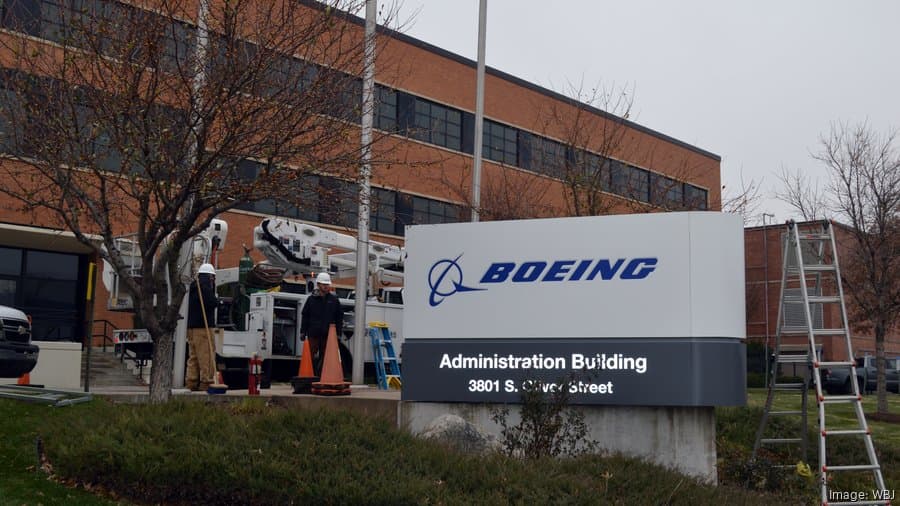
First Boeing sign installed at Spirit AeroSystems as acquisition nears closing
News Summary
A Boeing sign has been installed at Spirit AeroSystems' Wichita campus, marking a visible step towards the finalization of Boeing's $8.3 billion acquisition of Spirit AeroSystems. This development signifies the aerospace giant's impending return to Wichita, a city it departed years ago, and underscores the progress in integrating the two companies.
Background
Boeing's acquisition of Spirit AeroSystems, valued at $8.3 billion, is a strategic move to re-integrate a critical supplier. Spirit AeroSystems was spun off from Boeing in 2005, becoming a major independent manufacturer of aerostructures, notably supplying fuselages for Boeing's 737 MAX aircraft. This re-acquisition follows significant quality control issues and production challenges within Boeing's supply chain, particularly highlighted by incidents such as the January 2024 737 MAX door plug blowout. The Trump administration has been keenly focused on American manufacturing resilience and supply chain security, aligning this deal with broader goals of bringing key production capabilities back under domestic control.
In-Depth AI Insights
Will this acquisition fundamentally resolve Boeing's quality issues, or is it merely a superficial solution to a deeper challenge? - While re-integrating Spirit aims to bolster control over production, Boeing's quality issues are deeply entrenched and likely involve its internal culture, management structures, and broader supply chain ecosystem. - Acquiring a single critical supplier may not fully address systemic issues that have led to past production flaws. Sustained regulatory oversight and a commitment to internal transformation will be key to any lasting improvements. - From an investment perspective, investors should monitor long-term trends in Boeing's quality metrics, safety record, and production efficiency post-merger, rather than just short-term integration progress. What does this deal signify for the competitive landscape of the U.S. aerospace industry and its implications for global supply chains? - This acquisition solidifies Boeing's vertical integration in core aerospace manufacturing, potentially giving it greater pricing power and control over suppliers, but also increasing its own operational risk. - Globally, it could be seen as a defensive move by the U.S. aerospace sector to mitigate supply chain disruptions and potential geopolitical risks, especially amidst the long-standing rivalry with European competitor Airbus. - Strategically, this move might prompt other major aerospace manufacturers to reassess their supply chain strategies, potentially leading to more consolidation or strengthened supplier relationships in the future. Under President Trump's 'America First' agenda, what are the implications of this acquisition for U.S. manufacturing jobs and national security in the aerospace sector? - Bringing critical aerospace manufacturing jobs back under Boeing's direct control aligns with the Trump administration's 'America First' strategy for manufacturing employment and domestic production. - By nationalizing the production of key components, the deal is expected to enhance U.S. national security resilience in aerospace, reducing reliance on external suppliers and ensuring continuous supply for critical defense and civilian programs amidst geopolitical tensions. - The deal may also position Boeing for additional political support and government contracts, as it aligns with the administration's priorities of bolstering domestic capabilities in strategically vital industries.